Showing posts with label common core. Show all posts

Analyzing Our RtI: High Quality Instruction

Aug 28, 2016

After realizing our RtI model wasn't really working for us or our students, the teachers in my building decided to analyze the different components of our RtI model.  This blog series will go in depth with how we scrutinized each of the following parts of the model:
An overview
High Quality Instruction
Universal Screening
Research Based Interventions
Continuous Progress Monitoring
Fidelity
RtI meetings
Professional Development

This is where we needed to start when my building sat down to really talk about RtI.  Before we could look at interventions, RtI meetings, etc, we needed to determine if we were all on the same page with our Core classroom instruction.  And that is what we did.  We started with our reading instruction.

My district has a reading program that is followed.  But as we know, reading programs have a lot in them.  There is no way to hit everything that is in them.  So we pick what matches the needs, the standards, and what we all feel is best.  But this can also be tricky.

So we started with large chart paper.  I wrote each ELA standard on a separate piece of paper.  In vertical meetings (K-2), each teacher wrote down what they were doing to hit that particular standard or how it was hit in the basal program.

Looking at each standard in depth

Then came the hard part...determining what we felt was best practice and backed by research.  We wanted to ensure that we were utilizing our time and resources to their fullest potential.  Please don't think this was an easy discussion.  It never is.  We all have activities that we like to do, but that doesn't always mean that they are the best utilization of our time.

By looking at each standard and the ways of teaching it, in this type of detail, we were able to outline a literacy framework.
 After looking at many different samples, we decided our framework would include:

  •  an outline for each component of literacy that should be found in each classroom (here is one example):
building a literacy framework
  •  Guidelines of best practices for each of those literacy components (here is one sample):
building a literacy framework
  •  Description of what students and teachers are doing (another sample):
building a literacy framework

  •  Resources for each component of the ELA block: books, websites, articles
  • Glossary of terms
  • Definition of teacher roles
  • Common vocabulary to use as a building (this is to help students as they move from grade to grade)
  • Common materials needed.  We included the sight word lists that we would use as a building and some common vocabulary assessments that could be used.

Through this process we made a few discoveries:
  • As a building, we had a great foundation to start this framework.
  • Many best practices were already in place.
  • Teachers had a strong knowledge base about research based strategies
We also realized that we had some gaps:
  • We needed to "tighten" our times spent on different literacy components in order to "free" up time for Tier II interventions.
  •  We were not hitting vocabulary to the degree that we would have liked; therefore, we came up with a plan and a weekly assessment to integrate more vocabulary instruction.
  • Common usage of terms needed to be address because it would be beneficial to our students.
Analyzing the Core instruction at your school is similar to any assessment that is given to our students.  There are strengths and weaknesses.  As I reflected with the RtI specialist, she expressed that each time she goes through this process with a school different results are produced.  Each school comes to the table with a different set of needs.  The framework that works for one school may not work for another.  But  the conversations between staff members, the honesty, the tears, the letting go, the holding on, the learning, the growing, and the changing all help to create one strong framework and school.

With the literacy framework complete, we can now focus on our next chapter: universal screenings and their impact to uncover our Tier II needs.

Em

Make Math Real!

Aug 13, 2016


math quote
graphics: red pepper and madscrapper teaches
 Isn't this quote so true.  If you really think about it, math is part of almost everything that we do and any career that we choose.  But as a teacher of young little learners, it has been ingrained in me to focus on literacy.  And while, students must learn to read and it has the utmost importance, we can't put our math instruction on the back burner.

I know that I did.

I always felt like I was not "good" at math.  It did not make sense to me.  I have heard this same statement year after year at conferences with parents.  Because math did not make sense to me, I did not place as much importance and value on it during the first few years of my teaching life. And I think this can happen not only in the classrooms, but in the homes, as well.   Reflecting back now, I was just not taught math in a way that made sense to me and I am sure many parents are in that same boat.

So when it comes to educating our students in math, sometimes we have to re-educate ourselves, as well.

This past week my teammate and I presented at a local conference about the importance of making math REAL to students.  What I mean by this is connecting math to the everyday life around them.  When Jess and I sit down to plan we always start a lesson that will connect them to the Now and make it relevant to them.


When we presented, we decided to take each Common Core domain and share ways that we try to make it "Real."  Then we had the audience share out ways that they do this in their own classrooms.  We listed them on big sheets of paper.

Our hope is that everyone would come away with ideas to make math meaningful to our young students.  So much about our math instruction can easily sway towards abstract.  But if we can make it as concrete as possible, our students will have a better understanding, appreciation, and attitude in the end.

One thing we offered our audience was a graphic organizer with PreK-2 standards listed by domain.  Then there was a section to write down ideas to make each standard concrete and "real."  One more column was added for notes.  This may be where you write down what bombed, went well, or ideas you have for the next year.

https://drive.google.com/file/d/0B3eyEJCd5J5kM05VeXZBZTB1cU0/view?usp=sharing

 It is a simple tool, but an important one, that can help us to think about our little learners and their need to make connections to the world around them.  If you can use this, please just click on the image above and it is yours :)


Bringing Trash to School

Apr 21, 2015

With Earth Day being tomorrow, it seems most appropriate to discuss how we can reuse our trash.  Just bring it to school!

After our experience with the metacognition lesson , Karen and I decided we wanted to try out some direct inferring lessons with our firsties.

We decided to spread the lessons out over four days and leave the fifth day open to find out what they learned from the week.  After rereading the chapter from "Comprehension Connections" on inferring, we made our plan.  Each day we wanted to open the lesson with a different shoe.  The repetitive nature of that lesson would really help our students become confident in looking for evidence and using schema. We knew that they would enjoy this but wanted to quickly jump into making inferences within text.  So here is what we did:

On Monday Karen brought in her son's shoe:


We asked them..."Who do you think wears this shoe or what do you know about the person that wears this shoe?"  Immediately they came up with lots of ideas.  But with these ideas came another question..."how do you know?"
As they provided information to us, we recorded what they were saying as either evidence or schema.

 Then I read "The Secret Shortcut" by Mark Teague.  We made inferences about the text citing our evidence along the way.  I was really happy with the transfer of knowledge to the book.

Karen brought in her dog's shoe on Tuesday.  The kids had a lot of fun with this one.  Another Inference/Evidence chart was made.  Then they moved on to images.  There are a lot of great images out there on Pinterest or Google that can be used for inferring.  We had used some with a child that looked bored with his plate of food or an image of sunburned feet.  Basically, the kids need to gather evidence from the photo to infer.  Here is an example (of my child):

What can you infer from this image?

On Wednesday, we used a flip flop from Karen's daughter.  But our little firsties had confidence in this routine and came up with some great inferences quickly.  We did not write them down on chart paper this time but moved right along to more visual images.  We ended the lesson with the book "Animals Should Definitely Not Wear Clothes."  My sister had suggested it for this lesson and it was a great fit!


Thursday is when we brought in the real challenge, the real test.  Could they infer about my new neighbors across the street from the trash that I stole at the end of their driveway?  (This is just a made up story that I actually stole from the "Comprehension Connections" book).
Of course, we started the lesson with another shoe: my 4 year old's gym shoe.  They were getting good at this :)
Then came the trash.  I dumped out the whole black bag on the ground.  There was quite a bit of shock and disbelief on their faces. 

 After some discussion, we decided to organize or group the trash.  Then make inferences based on the groups of trash and evidence that we had.


Recording: My sister suggested using big butcher paper to place all the trash on and write the inferences right there next to the trash.  I ended up just making the same chart that I made for the shoe lessons.  This worked out fine for us.

By Friday we felt pretty confident that they did understand what it meant to make a good inference.  We decided not to do another shoe.  But our firsties had a different idea about that.  It could not be skipped.  So we inferred about a water shoe.
Then we watched two commercials that my sister recommended to us.  They were very powerful commercials to us (the adults!) and the kids were able to make some interesting inferences about the videos.  But we did keep asking them..."What is your evidence."  Here is the first one from YouTube:


Here is the second one from YouTube:


I think this is a good one to stop midpoint and ask them to infer about what is happening.  Then after the video I asked them "Do you think the adult planned this or the children?"  This was a very challenging question for our first graders, especially when I asked them to provide evidence.  I would be interested to hear what your students have to say.

To complete our week of inferring, we asked the kids to do a sort.  They had to read/listen to a sentence and infer whether the event occurred during the day or night.

I will say it has been a lot of fun to co-teach these types of lessons with our first graders.  I feel so lucky that we have the opportunity to learn so much from each other.  And I truly think the kids enjoy having two teachers up there acting goofy and pulling information out of them.

One final note...two or three weeks after this lesson one of my students found some random flip flops in a desk (we move classrooms).  And someone shouted out "we need to look for evidence!"  Ha!!!
Maybe we did something right.


A Lesson By Tanny McGregor

Apr 19, 2015


Earlier this week I posted this picture:
 I'll admit...it was totally a teaser.  We had such a great time watching Tanny McGregor's lesson on Wednesday that I just couldn't wait to share all about it.

But then this little one turned five and wanted a dragon party...so my post had to wait.
But I think my time has finally come to to share this amazing experience.

Tanny McGregor is the author of Comprehension Connections and Genre Connections.  She is a co-author of Comprehension Going Forward.  The reading teachers within my school have read her book Comprehension Connections.  They have discussed it, marked it up, tagged it, and taught it.  It has changed the way that we approach our introductions to new comprehension strategies.  Honestly, it has changed the way I introduce many topics in all subjects (but that is for another day, another post.)


Kindergarten Common Core

Sep 15, 2012

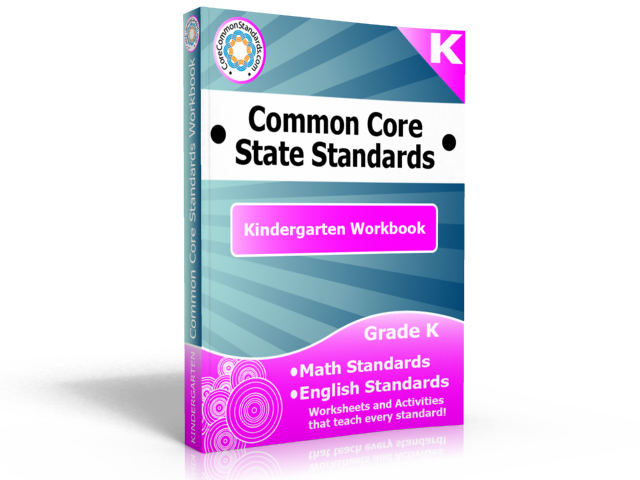
Have you seen this yet?  This common core workbook for Kindergarten looks AWESOME!!!

 It's filled with worksheets, activities and posters that are all linked to the Kindergarton Common Core and we all need a little lot of that!  I have my eyes on the first grade book, too!  One of the great features is that it's for English Language Arts AND Math!!!  SCORE!!!  This book will definitely be helpful in all the meaningful planning we are all doing this year focusing on the common core.