Showing posts with label reading. Show all posts
Teaching Deep Thinking and Emotions
Feb 20, 2020
How does the character feel in this story? How do you know?
These are comprehension questions that we ask our very youngest readers. Many times the answer to the first question is "good" or "bad." And to the second question, students have a difficult time explaining how they know that a character is feeling that way. Reading facial expressions, restating evidence in text, and (in more complex texts) inferring are skills that require prior experience, practice, and (for some) explicit teaching.
To help students think deeply about the characters in the books read, they need the vocabulary to do so. Let's look at one way to do this.
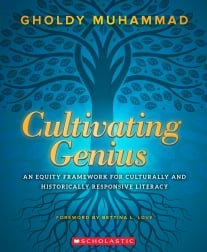
Cultivating Genius
Jan 13, 2020
Scholastic recently asked if I would like to read and review the new book "Cultivating Genius" by Gholdy Muhammad. The back of the book explained that Dr. Muhammad would offer an approach to address the students who have been traditionally "marginalized by learning standards, government policies, and school practices." I knew this was a book for me to dig into.
In her book, Gholdy Muhammad sends out an urgent call to educators for action. We need to make a change or the shift. She says we need to have...
Reading Revealed...A Book Giveaway!
Jul 18, 2019
We hope all of you have been having a tremendous summer! We hope you are feeling refreshed, rejuvenated, and ready to start thinking.... SCHOOL!
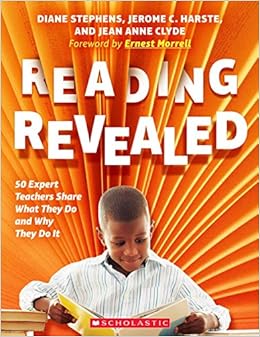
This summer we were given the opportunity to read Reading Revealed by Diane Stephens, Jerome C. Harste, and Jean Anne Clyde.
If you're a new teacher in need of ideas for reading OR if you're looking for a book to refresh your reading instruction, this the one for you. This book is jam packed with lessons and ideas to get to know your readers intimately.
This summer we were given the opportunity to read Reading Revealed by Diane Stephens, Jerome C. Harste, and Jean Anne Clyde.
If you're a new teacher in need of ideas for reading OR if you're looking for a book to refresh your reading instruction, this the one for you. This book is jam packed with lessons and ideas to get to know your readers intimately.
Using Dialogue to Inspire Writers
Feb 28, 2019
Our young readers and writers in first grade have many "tools" in their toolbox by this time of year. It can rewarding to the student (and teacher) to see them trying out some of their new skills through writing. Just last month, one of my striving readers started to really notice quotation marks in the books from her intervention group and tried to utilize this observation in her writing.
First up...introducing dialogue with a mentor text. The possibilities of books with dialogue are endless. Truly. But one that I wanted to introduce to you (or remind you of) is Iris and Walter. If you are a fan of Henry and Mudge, Annie and Snowball, Mr. Putter, or Frog and Toad, then this is another series to add to your library.
Iris and Walter are new friends. Each book features a moment in the life of a kid: field trips, friendship, substitute teachers, and new babies. The dialogue between them is very true to how you would imagine two friends talking. This is why I like to use it when taking a closer look at dialogue in writing. Here is an example of when Iris and Walter first meet each other.
Game Changer... GIVEAWAY!
Jan 2, 2019
Are you ready to up your game? Not just in your classroom, but as a school? Are you in need of a change? Then the book, Game Changer! Book Access for ALL Kids is the book for you!
This book is jam packed with LOTS of ideas to challenge you to think outside the box in order to get books into the hands of children. There are very simple ideas for changes that can be made in the walls of your classroom. But, Donalyn Miller and Colby Sharp also include ideas that are big. These are ideas that show you are willing to make a statement that reading is a priority in your school community.
After attending Nerd Camp in Michigan, which is hosted by Donalyn and Colby, I (Em) implemented some of these ideas into our school. As they state in this book, "this gap in book access perpetuates inequities between low-income students and their middle-income peers." To act on this, 15 books are given away each week, students take home about 10 books each for the summer, and have a daily opportunity to borrow books from the "readbox" each day. But even with these things occurring, this book opened my eyes to ways that I could make these rituals even stronger.
From the beginning of this book you will be challenged to take a look at your reading. You will be challenged to take a look at your classroom library. You will be challenged to take a look at your school library. You will also be challenged to put books in the hands of children. While reading, I (Maria) found myself reflecting on my classroom. There are things I need to change. There are things I need to add. I need to be a "Game Changer".
In this book you will also find many, many suggestions to get started, solutions to book deserts, how to build the power of ownership, increasing volume and the power of cultural representation. There are also little snippets for "Change in Action". These ideas come from teachers, literacy coaches, etc. My favorite, favorite suggestion in this book, comes in Chapter 8. Kristen Ziemke shares how and why to teach sneaky reading. I LOVE this idea! I have a few readers in my family who were sneaky readers and in the classroom, I didn't think about ever teaching this to children. You'll have to check out her suggestions!
We want you to ring in your New Year with some New Ideas!! You can win a copy of this book and begin your journey to "up your game!"
a Rafflecopter giveaway
This book is jam packed with LOTS of ideas to challenge you to think outside the box in order to get books into the hands of children. There are very simple ideas for changes that can be made in the walls of your classroom. But, Donalyn Miller and Colby Sharp also include ideas that are big. These are ideas that show you are willing to make a statement that reading is a priority in your school community.
After attending Nerd Camp in Michigan, which is hosted by Donalyn and Colby, I (Em) implemented some of these ideas into our school. As they state in this book, "this gap in book access perpetuates inequities between low-income students and their middle-income peers." To act on this, 15 books are given away each week, students take home about 10 books each for the summer, and have a daily opportunity to borrow books from the "readbox" each day. But even with these things occurring, this book opened my eyes to ways that I could make these rituals even stronger.
From the beginning of this book you will be challenged to take a look at your reading. You will be challenged to take a look at your classroom library. You will be challenged to take a look at your school library. You will also be challenged to put books in the hands of children. While reading, I (Maria) found myself reflecting on my classroom. There are things I need to change. There are things I need to add. I need to be a "Game Changer".
In this book you will also find many, many suggestions to get started, solutions to book deserts, how to build the power of ownership, increasing volume and the power of cultural representation. There are also little snippets for "Change in Action". These ideas come from teachers, literacy coaches, etc. My favorite, favorite suggestion in this book, comes in Chapter 8. Kristen Ziemke shares how and why to teach sneaky reading. I LOVE this idea! I have a few readers in my family who were sneaky readers and in the classroom, I didn't think about ever teaching this to children. You'll have to check out her suggestions!
We want you to ring in your New Year with some New Ideas!! You can win a copy of this book and begin your journey to "up your game!"
a Rafflecopter giveaway
Putting It All Together: A Winter Giveaway
Dec 6, 2018
Can you believe winter is almost here and 2018 is wrapping up. It amazes me each year how quickly it goes. I love the end of the year because it is a time to reflect and grow.
One reflection you may make at this time of year, is the gaps that are closing or growing between some of your students. Where do you need to push forward and where do you need to back up a bit?
Currently, I have students that are well on their way to becoming more fluent readers, while others are continuing to struggle with letters and sounds. It is time to push forward for some and pause for more explicit teaching for others.
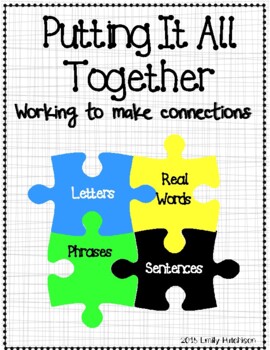
Some students do not quite know the difference between a letter, word, and sentence (this is true for many of our kindergartners). This Powerpoint visually shows students a letter. How the letters make up words and the words make up sentences. I made is a short video to show you a small part of the powerpoint. Click on the slide image to purchase (Free on 12/8/18-12/9/18 only).
My first graders know the difference between letters, words, and sentences, but may still have trouble seeing how they are interconnected. Iwanted needed my students to really SEE the connections. Out of that need...this was created. It helps students to "put it all together."
This particular version is a review sheet of short vowels. Students have the opportunity to read words with short vowel sounds, while also engaging in a short winter story.
When looking at this sheet. You can see that it begins with letter sounds. Students read each letter sound.
The second part illustrates that the letters from the first part make up words. Blend the words with students.
These words can then be found in phrases. (This is a great time to talk about why we read in phrases and how it can help us to sound like fluent readers).
Finally, these phrases (which include words, that are made from sounds) form sentences, paragraphs, and stories.
Every letter, word, and phrase connects to the winter story.
There are many different ways to use this sheet. One way to use this sheet may be to take one colored marker and highlight all the letters for one particular word (for example: "hats"). Then highlight the word "hats" in the second part. Highlight the phrase that "hats" is found in. Finally, find the sentence with the word "hats" and highlight it. This illustrates to the students the connection of the letters all the way down to the story.
This particular student illustrates another way to "put it all together." She was working on short vowel sounds in words. She highlighted the short vowels and looked at how the short vowel phrases could be found in the story.
While each student has their own individual needs, this sheet may be used differently in your classroom; however, the ultimate goal is for them to see how sounds, words, phrases, and sentences all build off of each other.
I hope that you can use these with your students. You can grab a free copy by clicking on the winter edition image below. If you are looking for more "focused" sheets, you can click on the second image. This pack has a different phonics skill per sheet. It is a great way to explicitly teach specific skills.
Not ready to use this? Just pin it for later!
Thanks for checking out these products. Although this is just a stepping stone, our ultimate goal is to always get books into the hands of our students. I love to support any local bookstores that I can, whether it be in my hometown or a city I'm visiting. Please enter the giveaway below for your chance to win $25 to Half Price Books (www.hpb.com).
a Rafflecopter giveaway
For a chance at more $25 giftcards and free resources, check out the sites below!
One reflection you may make at this time of year, is the gaps that are closing or growing between some of your students. Where do you need to push forward and where do you need to back up a bit?
Currently, I have students that are well on their way to becoming more fluent readers, while others are continuing to struggle with letters and sounds. It is time to push forward for some and pause for more explicit teaching for others.
Some students do not quite know the difference between a letter, word, and sentence (this is true for many of our kindergartners). This Powerpoint visually shows students a letter. How the letters make up words and the words make up sentences. I made is a short video to show you a small part of the powerpoint. Click on the slide image to purchase (Free on 12/8/18-12/9/18 only).
My first graders know the difference between letters, words, and sentences, but may still have trouble seeing how they are interconnected. I
This particular version is a review sheet of short vowels. Students have the opportunity to read words with short vowel sounds, while also engaging in a short winter story.
When looking at this sheet. You can see that it begins with letter sounds. Students read each letter sound.
The second part illustrates that the letters from the first part make up words. Blend the words with students.
These words can then be found in phrases. (This is a great time to talk about why we read in phrases and how it can help us to sound like fluent readers).
Finally, these phrases (which include words, that are made from sounds) form sentences, paragraphs, and stories.
Every letter, word, and phrase connects to the winter story.
There are many different ways to use this sheet. One way to use this sheet may be to take one colored marker and highlight all the letters for one particular word (for example: "hats"). Then highlight the word "hats" in the second part. Highlight the phrase that "hats" is found in. Finally, find the sentence with the word "hats" and highlight it. This illustrates to the students the connection of the letters all the way down to the story.
This particular student illustrates another way to "put it all together." She was working on short vowel sounds in words. She highlighted the short vowels and looked at how the short vowel phrases could be found in the story.
While each student has their own individual needs, this sheet may be used differently in your classroom; however, the ultimate goal is for them to see how sounds, words, phrases, and sentences all build off of each other.
I hope that you can use these with your students. You can grab a free copy by clicking on the winter edition image below. If you are looking for more "focused" sheets, you can click on the second image. This pack has a different phonics skill per sheet. It is a great way to explicitly teach specific skills.
Not ready to use this? Just pin it for later!
Thanks for checking out these products. Although this is just a stepping stone, our ultimate goal is to always get books into the hands of our students. I love to support any local bookstores that I can, whether it be in my hometown or a city I'm visiting. Please enter the giveaway below for your chance to win $25 to Half Price Books (www.hpb.com).
a Rafflecopter giveaway
For a chance at more $25 giftcards and free resources, check out the sites below!
Opinion Writing with Miss Turie's Magic Creatures
Sep 30, 2018
I have seem many lessons out there on opinion writing about pets. There are some great mentor texts to use that support students in this writing process
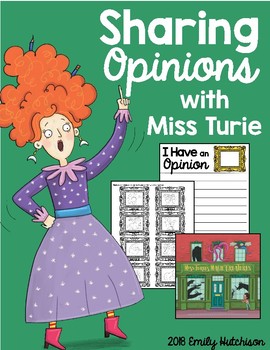
Miss Turie owns a pet shop and she has one guarantee: to find the right pet for you! A young boy comes in to find his perfect pet and Miss Turie shows him around. Each creature is mythical and magical, but not right for him.
This book is colorful and fun. It is full of speech bubbles and curious magic. One of my favorite parts about this book are the last four pages. One these pages, the author shares a little history about each of the mythical creatures within the story. This lends itself really well to opinion writing :)
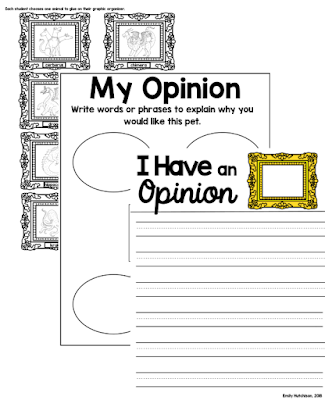
This freebie includes images of each "pet" within this book. Students pick the pet that would be best for them. Then they explain why. There are differentiated versions of the webs and paper choices.
If you would like to check out this book, just click on the image above. And grab this companion product (FREEBIE) by clicking on the image below! Hope you enjoy the books!
- The Perfect Pet by Margie Palatini
- Cats Vs. Dogs by Elizabeth Carney
- One Word for Sophia by Jim Averbeck
- Can I Have A Stegosaurus, Mom? Can I Please?
- I Wanna Iguana by Karen Orloff
Miss Turie owns a pet shop and she has one guarantee: to find the right pet for you! A young boy comes in to find his perfect pet and Miss Turie shows him around. Each creature is mythical and magical, but not right for him.
This book is colorful and fun. It is full of speech bubbles and curious magic. One of my favorite parts about this book are the last four pages. One these pages, the author shares a little history about each of the mythical creatures within the story. This lends itself really well to opinion writing :)
This freebie includes images of each "pet" within this book. Students pick the pet that would be best for them. Then they explain why. There are differentiated versions of the webs and paper choices.
If you would like to check out this book, just click on the image above. And grab this companion product (FREEBIE) by clicking on the image below! Hope you enjoy the books!
Let's Encourage...With Books
Jul 31, 2018
As each new year begins, I look forward to what I will teach my students. My vision has always been relatively the same, but as I grow and change, my lessons for my students do too. For the past few years, we have taken the first one and a half to two weeks to focus on explicitly teaching students the meaning of curiosity, bravery, trustworthiness, strategic thinking, responsibility, respect, and persistence. This may sound like a big task. It is not expected for a first grader to master these skills (I'm still working on them as an adult!). But working on them throughout the year is important. And (of course) there is a book for that!
Bravery:
Being brave is all about taking risks. This looks different for each one of our students and they need to be explicitly taught this fact. For one student, bravery may be in the form of raising their hand to answer a question. For another student, it may be taking risk to try a new food they have never heard of before.One more great book to mention is Stand Tall, Molly Lou Melon. This young girl stands up for who she is and that takes guts.
Trustworthiness
We know that it takes a lot of love, consistency, and time to build trust. In order to build independent students, we do need to maintain a level of trust. Trust to use the restroom, walk the halls, or to work at a station. Plus, we need to ensure that our students trust us to teach them, love them, and to create a safe environment.The Big Fat Enormous Lie does a great job of illustrating what it looks like and feels like to be sitting with a lie all day. This book can lead to a lot of great conversation. The Empty Pot by Demi really shows the importance of honesty, even when you think you may not benefit. The classic, The Boy Who Cried Wolf, really does demonstrate what can happen when you are dishonest over and over again.
Strategic Thinking
Strategic thinking is a powerful skill to possess. We must tap into this skill when any problem arises in our lives. It allows children to be problem solvers and fosters independence. One important thing to note is that our students need to also acknowledge that there can be multiple ways to solve a problem. Discuss what other ways the problems could have been solved.Here are just a few fiction titles that spotlight characters that needed to think strategically in order to solve a problem. Picnic with Oliver by Mika Song is a story about two friends on a quest to have a picnic together. Unfortunately a storm pops up, leaving one friend stranded in the middle of a pond. Quick thinking and problem solving must take place to save the little mouse! Two Problems for Sophia by Jim Averbeck is a sweet story about a girl that is determined to keep her pet but to do so, she must solve a few complications. There's An Alligator Under My Bed by Mercer Mayer is another creative story about problem solving and creative thinking!
Responsibility
"It is your responsibility." I feel like I say this 100 times a day in my household. This is one of those skills that we just have to continue to nurture and patiently teach over and over again. But by fostering it, we are once again adding a layer to the growth of more independent learners.I love how visual Pigsty is! Mark Teague does a great job illustrating what it looks like when you are not being responsible for your own space. Good Dog, Carl is interesting because the mother in the story is not responsible at all! But Carl is and that can lead to some good conversation. I think The Berenstain Bears' New Pup is a book that many of our students can relate too. Adding a pet to the household means new responsibilities for everyone.
Respect
This word can take on many different meaning in a classroom. We must have respect for our space, our tools, and the other people in the classroom. For children, it is important to help them respect the differences and to see value in that.In The Crayon Box that Talked, the crayons learn that one is not better than another. But they are stronger when used together. I'm the Best by Lucy Cousins has a similar message. Dog is sure that he is the best at everything but learns that each animal has their own strength. Me and You takes a different approach to respect. The characters both want to be like their friend. They discover through this story to respect themselves for who they are.
Persistence
This is a hard skill, but so important to learn at a young kid (and then continue to work on!) Things are hard and to learn to persevere will help you throughout life! We have to provide lots of support, examples, and practice with this skill! There are so many great biographies that illustrate strong individuals persevering through hard times. But here are a couple fiction titles:Let Me Finish! by Minh Le is about a boy that just wants to read! But some animals are keeping him from enjoying the book. He does not give up on reading! More-igami is a new favorite of mine. A young boy is struggling to learn origami and learns he must be persistent. Flight School features a strong character that just really wants to fly even though it may seem impossible.
Curiosity
Curiosity and wonder has led our world to so many discoveries and inventions. But I fear that we have taken much wonder out of our schools. Promoting creative thinking and questioning can help to nurture this curiosity.Dreaming Up by Christy Hale is an interesting book that combines photographs of architecture and illustrations of characters utilizing the photographs for their own creations. The Cow Who Climbed A Tree shows that their are no boundaries to what we can wonder and explore. Ada Twist, Scientist explores what can happen when we act on our questions and dive into our wonderment!
Please note that these are only a few books that hit on these topics. There are 500 million more out there! Especially since I didn't hit on all the great nonfiction that can also be utilized. I am always on the lookout for more books to share. Please let me know if you have titles you can't live without!
Encourage Book Love
Jul 28, 2018
The beginning of the year is a busy time of year. Setting up routines, procedures, getting to know you activities, organizing supplies, and five million other things that we must balance to have a healthy classroom environment.
Among these first weeks of classroom environment "set-up," we also want to establish the place that books play in the life of our classroom. Some students come to us with book love already in place and some may not have much experience with books. So it is important to talk about it and let the students know how you feel about books and the value you place on them.
And there are some great books to help you do this!
I have some favorites that have been used year after year. But this one is new to me this year! It is called Look! by Jeff Mack. In this story, the gorilla is desperately trying to get a boy to pull his eyes away from the television to look at a book! He goes to great lengths (just as we do) to engage this young child!
I will not spoil the ending for you; although, I am sure you can predict it! This is a new read that will occur in our classroom this year!
In case you are looking for other books that focus on this same topic, here are some of my favorites:
If you have some more to recommend, I would LOVE to hear what they are!! Thanks!
The book Look! is linked to an independent book store in South Bend, Indiana. I am not an affiliate in any way. Just a girl that tries to support independent book stores!
The Megabook for Fluency
Jul 11, 2018
Maria and I have shared our thoughts on the professional read Responsive Literacy: A Comprehensive Framework. We have also had the opportunity to review The Megabook of Fluency by Timothy Rasinski and Melissa Smith. And I will just go ahead and admit it...I was a little nervous about writing a post about fluency lessons/interventions. In recent years, fluency has had a pretty bad rap because of assessments that just analyze rate. That has forced fluency to take on a meaning of speed versus a multi-dimensional word.
But luckily, the authors address this misconception IMMEDIATELY. Fluency is multi-dimensional and includes the following components:
- Expression which includes prosody, intonation, tone, stress
- Automatic word recognition which includes pace or rate
- Rhythm and Phrasing which includes pausing
- Smoothness which includes accuracy and ability to self correct
It is mentioned that expressive reading is hard to measure. Everyone probably hears something a little different. Due to this, it is often missing from our instruction of fluency. This point really stuck out to me. Just because we can't assess it (or it is difficult to), doesn't make it less important.
Rasinski and Smith recommend using "effective, engaging, and authentic [fluency instruction] methods that build word recognition automaticity (not speed) and prosodic or expressive reading." Due to this need, the rest of the book (literally 300 pages) is full of lessons to support effective fluency instruction. There are lessonS for each of the following categories:
Begin Early: Fluency in Primary Grades
Expressive Fluency
Fluency Fun: poems, songs, chants
Social Fluency
Partner Texts
Famous Quotes
Environment
Family Involvement
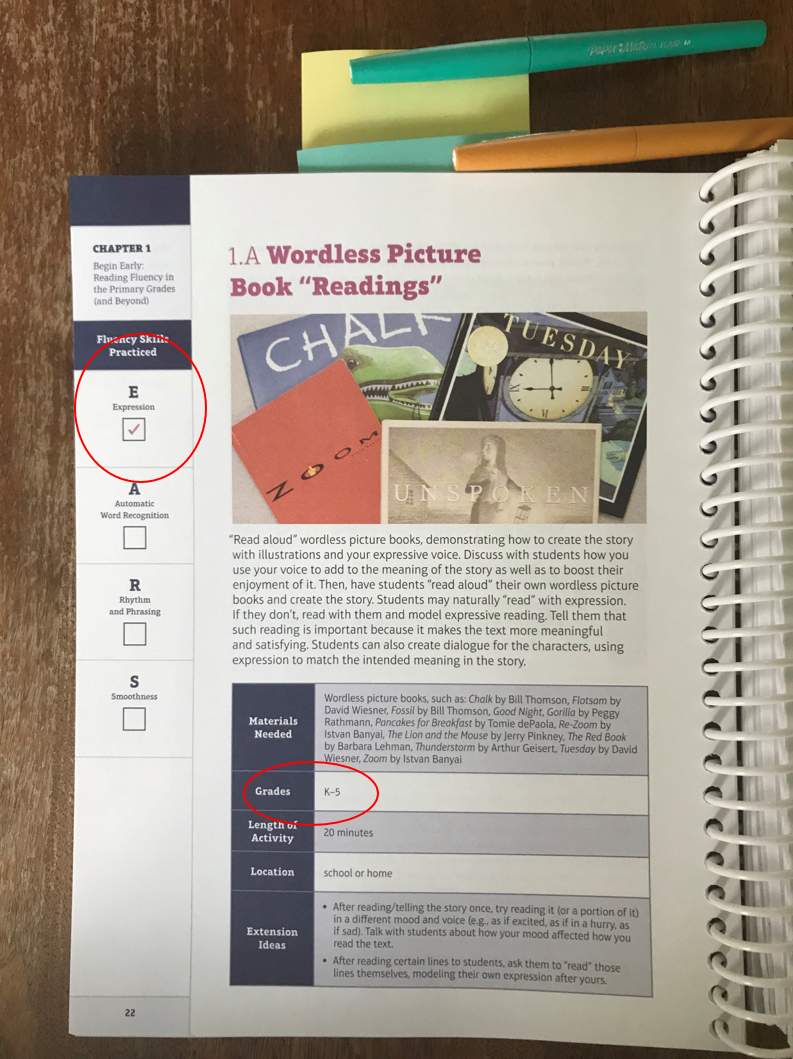
First off...can I just say teaching fluency with wordless books! Yes!! I'll be honest. I never thought of that. But I can see it now because it ties right into language!
I love that the lesson highlights (on the left) exactly what fluency skill is being practiced. I can see this being helpful to me when I am really looking for a lesson that will hit a specific need for a student. Sometimes they just need a "little something" to bring the point home. I also liked that each lesson highlights the grade band that it would work best for. It is a large band. But it still provides me with an idea of when a student should be participating in that type of instruction.Here is an example of another lesson You can see that all the fluency skills are checked off for this lesson. This lesson provides an example of something else I really liked about this book...the materials. "Jump-Rope Chants" does provide a book idea for you to purchase but behind this lesson are jump rope chants that you can use right away with your students.
Thank you!
Overall, I was happy to see the authors of this book addressing the negative tones that have surrounded fluency. It is an important skill but it entails so much more than speed and word counting. And these lessons certainly hit upon all aspects of fluency instruction.
Check back for a giveaway!
Resposive Literacy: A Comprehensive Framework Part 2
Jul 10, 2018
As the school year was coming to a close, Em and I were offered the opportunity to read Responsive Literacy: A Comprehensive Guide by editor Patricia L. Scharer. Believe us, it IS just that! This book hits on everything that is important for your ELA block.
When I started reading the writing portion of this book, I was immediately reminded of why I adore teaching writing because it affirmed things I already do in my writing classroom and helped me realize there are things I need to revisit. If you are looking to jump start your writer's workshop or if you need a refresher, this section is a great reminder of all things writing. From how to go about starting writer's workshop all the way to conferencing with students.
A few things I thought were awesome about this book is it offers you great tips, thought out ideas for lessons, and suggestions for professional development. I can see myself sitting down with other writing teachers to discuss these points.
The next few chapters take you on a journey into Narrative Writing in the primary and elementary grades. One thing that was helpful for me was going back over the stages of writing development. It was a great refresher and I feel like I need to have examples of these stages available for my families when I sit down with them at conferences.
Finishing out this amazing resource is a section on the home-to-school bridge using KEEP Books, coaching, professional learning, and how to lead your school to a comprehensive literacy framework.
As a teacher for almost 20 years, this resource was one that would have been a great asset 20 years ago, if only it was written then. :) This book was easy to read and is one that is a must have on your teacher shelf.
When I started reading the writing portion of this book, I was immediately reminded of why I adore teaching writing because it affirmed things I already do in my writing classroom and helped me realize there are things I need to revisit. If you are looking to jump start your writer's workshop or if you need a refresher, this section is a great reminder of all things writing. From how to go about starting writer's workshop all the way to conferencing with students.
A few things I thought were awesome about this book is it offers you great tips, thought out ideas for lessons, and suggestions for professional development. I can see myself sitting down with other writing teachers to discuss these points.
Being Interactive Writers...
As I began my reading with chapter 15, I was quickly reminded about Interactive Writing. What a gem this can be to your writing classroom and I have used it in the past but over the last year or so I have moved more to modeling versus being interactive. This chapter reminded me of the importance of interactive writing in the development of young writers. It's important for them to see us write, but also to help us write alongside them.Let's Refresh...
The book goes on to giving you tools you need in your writing classroom, basic plans for mini-lessons, and ideas for rubrics in chapter 16. I really loved the mini-lesson refresher because that's where a lot of great teaching can happen.The next few chapters take you on a journey into Narrative Writing in the primary and elementary grades. One thing that was helpful for me was going back over the stages of writing development. It was a great refresher and I feel like I need to have examples of these stages available for my families when I sit down with them at conferences.
Word Work...
Section Five of this book revolves around Language starting off with phonics and spelling. For me this chapter got my thoughts a rolling because for the last few years I've done spelling in my classroom and a pinch of phonics, but next year I'm responsible for most of the phonics instruction. This chapter walked you through the stages of spelling development and word study. You will also find a helpful explanation on how to implement an explicit words study block in your classroom. What I also like is how Carla Steele, Patricia L. Scharer, and Denise Rowe give you ideas on how to embed word study opportunities throughout your ELA block as well as give you lists of resources that are needed in your classroom for word study.Don't Forget Vocab...
Next, I read about accelerating vocabulary development. When reading, I was reminded of how it's easier to pick out and be intentional with the words you want prior to sharing the text with your students. Again, not that "on a whim" isn't okay, but if you are planning ahead of time, you're looking for those words that are "tier-two", high utility words. After reading up on vocabulary, handwriting was on the list next. In this chapter you will find a valuable resource about the verbal paths you can use to help students with lower and uppercase letter formation. I am already starting to think about how I can incorporate these into my everyday instruction of letter formation in the beginning of the year.A Learning Commmunity
The final section in this resource, section six, focuses on "A Learning Community". We get started with a rundown of inquiry in the classroom. There are ideas for designing inquiry units using backward design. This is where you identify your results desired, determine evidence, and plan the experiences and instruction your students will receive. The chapter goes on to give you ideas and several mentor texts you can use for different inquiry lessons. Finally, Sherry Kinzel, Wendy Sheets, and Carla Steele take you all they way through their 10 step recipe for an "Inquiry Approach to Studying Genre". Fantastic!!!Finishing out this amazing resource is a section on the home-to-school bridge using KEEP Books, coaching, professional learning, and how to lead your school to a comprehensive literacy framework.
As a teacher for almost 20 years, this resource was one that would have been a great asset 20 years ago, if only it was written then. :) This book was easy to read and is one that is a must have on your teacher shelf.
Responsive Literacy: A Comprehensive Framework Part 1
Jul 9, 2018
This summer Maria and I were offered the opportunity to read Responsive Literacy: A Comprehensive Framework edited by Patricia L. Scharer. The book is written by professionals that work within the Literacy Collaborative at The Ohio State University. A few years back, I attended a training in this framework. It is built around strong literacy practices and this book digs deep into that instruction. While reading, I was reminded of the learnings that I took away from the training but also literacy practices that I could improve upon this upcoming year.
Chapter 1 starts this book off strong because it is all about Oral Language! Yes!! This has been a HUGE game changer for us over the past several years. We have included more and more intentional oral language into our literacy instruction. Because, as the author reinforces, although students come to school with language experience, they are rapidly continuing to develop this skill. And so, we need to be intentional about the opportunities we provide during interactive read aloud, shared reading, guided reading, writer's workshop, and word study. Gay Su Pinnell offers a buffet of ideas for each of these. This chapter reminded me that children need to be given time to interact. They need to talk. We need to listen.
After some great descriptions on a literacy framework, Carol A. Lyons takes a deeper look at the role emotion plays on memory and comprehension. She explains that there is an inseparable connection between emotion and cognition. This is important to note because we are supporting the learning of little humans. And humans are emotional! One thing that I found fascinating is that memories are stronger when emotions are connected to them. What does this mean for our literacy instruction? What emotions are we bringing out in our students? And what emotions are they connecting to their learning of language, writing, and reading skills?
Wendy Sheets continues this discussion by examining how we foster literate identities. The actions we take within our classroom tells stories to our students. One point that she is makes during this chapter is that students are not a reading level. What stories and emotions are we bringing to the table when we limit them to a book level? I don't believe positive ones (but that could be another post). Wendy says, "The literate identities that our students take on affect their progress over time."
Over the years I have found that there are certain ways that I do things. But when reading and growing throughout the summer, I am reminded that I am not stuck to these routines. Lisa Pinkerton reminded me, in this section, that interactive read alouds do not need a lengthy introduction. It can even be as quick as, "I found a new book for you this weekend! I am so excited to share it with you!" Yes! What a great reminder.
But Mary D Fried goes on to examine how we are scaffolding the introductions of guided reading books. When I first looked at this chapter, I was ready to skip it because this is what I do all...day...long. But then I saw this:
Uh.Oh. I may have some new things to learn! The chapter really looks carefully at the differences between an emergent, early, and transitional reader. The introduction is not going to be a "one size fits all" because these readers need different scaffolds based on where they are in their learning. As facilitators of this learning we have to be very deliberate in the teaching decisions that we make. The author does provide a guide for scaffolding a book introduction for emergent, early, and transitional readers.
Another point that I really took to heart was concerning data and the analysis of a reading record. Since we began using LLI (Leveled Literacy Instruction) two years ago, my reading record analysis has been much stronger. But Sherry Kinzel shared a chart that really opened my eyes to how I could strengthen what I am learning about the reader. The chart is separated into three columns:
Check back as Maria dives deeper into sections about writing, language and a learning community! Plus...we have some books to giveaway!
Let Them Talk...
Chapter 1 starts this book off strong because it is all about Oral Language! Yes!! This has been a HUGE game changer for us over the past several years. We have included more and more intentional oral language into our literacy instruction. Because, as the author reinforces, although students come to school with language experience, they are rapidly continuing to develop this skill. And so, we need to be intentional about the opportunities we provide during interactive read aloud, shared reading, guided reading, writer's workshop, and word study. Gay Su Pinnell offers a buffet of ideas for each of these. This chapter reminded me that children need to be given time to interact. They need to talk. We need to listen.Literacy is Emotional
After some great descriptions on a literacy framework, Carol A. Lyons takes a deeper look at the role emotion plays on memory and comprehension. She explains that there is an inseparable connection between emotion and cognition. This is important to note because we are supporting the learning of little humans. And humans are emotional! One thing that I found fascinating is that memories are stronger when emotions are connected to them. What does this mean for our literacy instruction? What emotions are we bringing out in our students? And what emotions are they connecting to their learning of language, writing, and reading skills?Wendy Sheets continues this discussion by examining how we foster literate identities. The actions we take within our classroom tells stories to our students. One point that she is makes during this chapter is that students are not a reading level. What stories and emotions are we bringing to the table when we limit them to a book level? I don't believe positive ones (but that could be another post). Wendy says, "The literate identities that our students take on affect their progress over time."
Get Organized
The second section of this book dives into how to organize for independent readers. Our ultimate goal as teachers, right! We work so hard to help students to think, read, and write independently. I love the way that it is broken down into sections about independent work, the second grade transition, and independent readers in grades 2-6 because we know that reading and writing look different throughout our lower grade levels. One part that I really loved discussed how to make independent work more powerful. As the year went on, I know that it could be easy for me to get into an independent work slump. The authors suggest analyzing the following when organizing work that challenges each student:- create just right challenges
- provide authentic problem solving activities
- provide open activities for choice and inquiry
Let's Read
Section three dissects all things reading! Interactive read alouds, shared reading, guided reading, fluency, comp, and the use of data are all explored in great detail. Whether a new teacher, an experienced teacher, or a teacher looking for a refresher...this book hits it all.Over the years I have found that there are certain ways that I do things. But when reading and growing throughout the summer, I am reminded that I am not stuck to these routines. Lisa Pinkerton reminded me, in this section, that interactive read alouds do not need a lengthy introduction. It can even be as quick as, "I found a new book for you this weekend! I am so excited to share it with you!" Yes! What a great reminder.
But Mary D Fried goes on to examine how we are scaffolding the introductions of guided reading books. When I first looked at this chapter, I was ready to skip it because this is what I do all...day...long. But then I saw this:
Uh.Oh. I may have some new things to learn! The chapter really looks carefully at the differences between an emergent, early, and transitional reader. The introduction is not going to be a "one size fits all" because these readers need different scaffolds based on where they are in their learning. As facilitators of this learning we have to be very deliberate in the teaching decisions that we make. The author does provide a guide for scaffolding a book introduction for emergent, early, and transitional readers.
Another point that I really took to heart was concerning data and the analysis of a reading record. Since we began using LLI (Leveled Literacy Instruction) two years ago, my reading record analysis has been much stronger. But Sherry Kinzel shared a chart that really opened my eyes to how I could strengthen what I am learning about the reader. The chart is separated into three columns:
- reading behaviors the reader uses successfully
- reading behaviors the read can "almost do" or can use with support
- reading behaviors the readers shows no evidence of using
Check back as Maria dives deeper into sections about writing, language and a learning community! Plus...we have some books to giveaway!
Staff Book Club
Jan 5, 2018
After completing some staff book studies through the summer, we decided we wanted to keep the connection going.
The book conversations and the time together have really been a shining light in our year. It has made me feel more connected to my teammates, new friendships have been formed between school buildings, and it has stretched my reading comfort level.
Here's how it started:
After attending the diverse book panel discussion at Nerd Camp:
My teammate, Sarah, came up with some book titles for the year. The goal was to read books written by a diverse group of authors. Our hope was to open us up to a variety of characters that would, in turn, lead us to have deep conversations and push us, as educators, to be more aware of the students and their possible perspectives.
These were the books that Sarah decided on:
(This is a bookmark that we made for all of the book club attendees)
We have met each month (and even met to see Wonder on the big screen). One person volunteers to be the facilitator to keep us on track. Plus they come with some book club questions in hand. This has proven to be really helpful because it is super easy to get off track and talk about school, students, or district stuff.
Personally, I feel that the original vision for the book club, has been a reality. Talking with others about the characters, plot, or the voice of the author, has helped me to grow as a reader. It has opened my eyes to other perspectives. And made me feel part of a community.
Some books that are on my list as possibly readers for next year include:
Sometimes, we don't see the path that we are headed down. But through some small changes in my life, through some new friendships I have made this year, and by stepping outside of my comfort zone, I feel that I have a community of readers around me (online and in person). It is a change that I needed.
Books suggestions?? We would love to hear them!
Em
The book conversations and the time together have really been a shining light in our year. It has made me feel more connected to my teammates, new friendships have been formed between school buildings, and it has stretched my reading comfort level.
Here's how it started:
After attending the diverse book panel discussion at Nerd Camp:
My teammate, Sarah, came up with some book titles for the year. The goal was to read books written by a diverse group of authors. Our hope was to open us up to a variety of characters that would, in turn, lead us to have deep conversations and push us, as educators, to be more aware of the students and their possible perspectives.
These were the books that Sarah decided on:
(This is a bookmark that we made for all of the book club attendees)
We have met each month (and even met to see Wonder on the big screen). One person volunteers to be the facilitator to keep us on track. Plus they come with some book club questions in hand. This has proven to be really helpful because it is super easy to get off track and talk about school, students, or district stuff.
Personally, I feel that the original vision for the book club, has been a reality. Talking with others about the characters, plot, or the voice of the author, has helped me to grow as a reader. It has opened my eyes to other perspectives. And made me feel part of a community.
Some books that are on my list as possibly readers for next year include:
Sometimes, we don't see the path that we are headed down. But through some small changes in my life, through some new friendships I have made this year, and by stepping outside of my comfort zone, I feel that I have a community of readers around me (online and in person). It is a change that I needed.
Books suggestions?? We would love to hear them!
Em
Uping My Fluency Game
Dec 30, 2017
You know those skills that you love and you can't wait to teach them each and every year? Our whole group fluency lessons is one of those for me. The fact that my teammate and I make it so visual and our mentor texts are fun, silly, and super engaging is what pulls out the excitement in me.
But the lessons this year...took a turn.
As I reflected on the year to determine what changed, of course it was the kids. But it was also our instruction thus far in small group. And this stems back to the Benchmark assessment from Fountas and Pinnell.
We adopted that assessment this year and it has changed me. The literacy continuum included in the assessment (especially the types of questions asked about, within, and beyond the text) have really helped me to grow as a teacher. In turn, much fluency instruction has occurred through the strong conversations that we are having during guided reading and in the writing talks that occur daily.
The effect: my whole group fluency lesson that I love so much, had to grow and change too!
In previous years, our focus was on what fluency is and the phrasing that you need in order to sound fluent. We would create a chart to help them understand the progression. It looked like this:
This year...we ended up really letting them guide the chart based on what they have learned thus far in the year. It turned out like this:
The focus shifted from what fluency is and the progression to get there to what a fluent reader pays attention to and how they sound. When I write that out in a sentence, it doesn't seem like much of a difference. But it felt like a huge difference. It was more about the students sharing what they know about what readers do versus us teaching them about fluency.
Here are our books that we like to use to teach fluency:
We start off the week with Wolf! I love the way this book illustrates different ways that we can sound as readers. I showed my students how the author wrote the words so that I knew how wolf sounded.
Students talked about not reading too fast or too slow. Of course this led to a great discuss about spaces between words when reading and writing.
On the second day we focused on different ways that authors add "voice" to their writing and how we, as readers, need to read it. Students have seen bold words and speech bubbles in some of their guided reading text but The Monster At the End of This Book takes it to a whole new level. There are large words, bold words, tiny words, colored words, interesting facial expressions, and more.
The discussions about matching our voice to the words and facial expressions were so exciting! This is a change from last year and I think it comes from all the conversions that my entire school is having around feelings (zones of regulations). Each student seems more "in tune" to how characters are feelings versus just happy or sad.
On the third day, we focused our attention to Ball! This book has only one word..."ball." But in order to understand the meaning behind the book, students must read the pictures and analyze the way that the word "ball" is written. This built off the conversations from the previous day.
Day four included a video from State Farm Insurance. It is perfect example of the need for readers to pay attention to voice of the author. We started with a copy of the script from the commercial:
After reading through the script, we showed the commercial.
In order to understand the meaning behind the words, students had to read the pictures, pay attention to feeling. We discussed how the scripts for these two characters had to be written very differently, in order for them to understand how they needed to act.
Finally, we put together all of this great learning on day five. Students were asked to pay attention to the way the words were written, the phrasing that was being used (the ribbon swoops), and the picture (which was my facial expression).
Each year I grow, my students change, and reflecting upon this makes me just a little bit stronger than the previous year. As I learn through Fountas and Pinnell, professional readings, and watch the strong teachers that surround me, I look forward to seeing where I can help to guide my young readers.
Em
But the lessons this year...took a turn.
As I reflected on the year to determine what changed, of course it was the kids. But it was also our instruction thus far in small group. And this stems back to the Benchmark assessment from Fountas and Pinnell.
We adopted that assessment this year and it has changed me. The literacy continuum included in the assessment (especially the types of questions asked about, within, and beyond the text) have really helped me to grow as a teacher. In turn, much fluency instruction has occurred through the strong conversations that we are having during guided reading and in the writing talks that occur daily.
The effect: my whole group fluency lesson that I love so much, had to grow and change too!
In previous years, our focus was on what fluency is and the phrasing that you need in order to sound fluent. We would create a chart to help them understand the progression. It looked like this:
This year...we ended up really letting them guide the chart based on what they have learned thus far in the year. It turned out like this:
The focus shifted from what fluency is and the progression to get there to what a fluent reader pays attention to and how they sound. When I write that out in a sentence, it doesn't seem like much of a difference. But it felt like a huge difference. It was more about the students sharing what they know about what readers do versus us teaching them about fluency.
Here are our books that we like to use to teach fluency:
We start off the week with Wolf! I love the way this book illustrates different ways that we can sound as readers. I showed my students how the author wrote the words so that I knew how wolf sounded.
Students talked about not reading too fast or too slow. Of course this led to a great discuss about spaces between words when reading and writing.
On the second day we focused on different ways that authors add "voice" to their writing and how we, as readers, need to read it. Students have seen bold words and speech bubbles in some of their guided reading text but The Monster At the End of This Book takes it to a whole new level. There are large words, bold words, tiny words, colored words, interesting facial expressions, and more.
The discussions about matching our voice to the words and facial expressions were so exciting! This is a change from last year and I think it comes from all the conversions that my entire school is having around feelings (zones of regulations). Each student seems more "in tune" to how characters are feelings versus just happy or sad.
On the third day, we focused our attention to Ball! This book has only one word..."ball." But in order to understand the meaning behind the book, students must read the pictures and analyze the way that the word "ball" is written. This built off the conversations from the previous day.
Day four included a video from State Farm Insurance. It is perfect example of the need for readers to pay attention to voice of the author. We started with a copy of the script from the commercial:
After reading through the script, we showed the commercial.
Finally, we put together all of this great learning on day five. Students were asked to pay attention to the way the words were written, the phrasing that was being used (the ribbon swoops), and the picture (which was my facial expression).
Each year I grow, my students change, and reflecting upon this makes me just a little bit stronger than the previous year. As I learn through Fountas and Pinnell, professional readings, and watch the strong teachers that surround me, I look forward to seeing where I can help to guide my young readers.
Em
Subscribe to:
Posts (Atom)