Showing posts with label guided reading. Show all posts

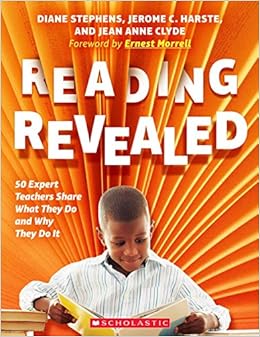
Reading Revealed...A Book Giveaway!

Jul 18, 2019

We hope all of you have been having a tremendous summer!  We hope you are feeling refreshed, rejuvenated, and ready to start thinking.... SCHOOL!

This summer we were given the opportunity to read Reading Revealed by Diane Stephens, Jerome C. Harste, and Jean Anne Clyde.


 If you're  a new teacher in need of ideas for reading OR if you're looking for a book to refresh your reading instruction, this the one for you.  This book is jam packed with lessons and ideas to get to know your readers intimately.

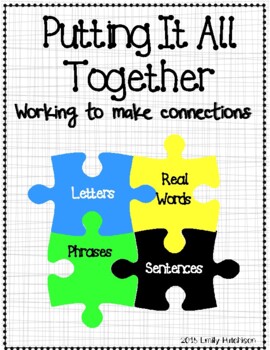
Putting It All Together: A Winter Giveaway

Dec 6, 2018

Can you believe winter is almost here and 2018 is wrapping up.  It amazes me each year how quickly it goes.  I love the end of the year because it is a time to reflect and grow. 
One reflection you may make at this time of year, is the gaps that are closing or growing between some of your students. Where do you need to push forward and where do you need to back up a bit?

Currently, I have students that are well on their way to becoming more fluent readers, while others are continuing to struggle with letters and sounds.  It is time to push forward for some and pause for more explicit teaching for others.


Some students do not quite know the difference between a letter, word, and sentence (this is true for many of our kindergartners).  This Powerpoint visually shows students a letter.  How the letters make up words and the words make up sentences.   I made is a short video to show you a small part of the powerpoint. Click on the slide image to purchase (Free on 12/8/18-12/9/18 only).


My first graders know the difference between letters, words, and sentences, but may still have trouble seeing how they are interconnected. I wanted needed my students to really SEE the connections.  Out of that need...this was created.  It helps students to "put it all together."

This particular version is a review sheet of short vowels.  Students have the opportunity to read words with short vowel sounds, while also engaging in a short winter story.

When looking at this sheet.  You can see that it begins with letter sounds.  Students read each letter sound. 

The second part illustrates that the letters from the first part make up words.  Blend the words with students.

These words can then be found in phrases.  (This is a great time to talk about why we read in phrases and how it can help us to sound like fluent readers).

Finally, these phrases (which include words,  that are made from sounds) form sentences, paragraphs, and stories.

Every letter, word, and phrase connects to the winter story.

There are many different ways to use this sheet.   One way to use this sheet may be to take one colored marker and highlight all the letters for one particular word (for example: "hats").  Then highlight the word "hats" in the second part.  Highlight the phrase that "hats" is found in.  Finally, find the sentence with the word "hats" and highlight it.  This illustrates to the students the connection of the letters all the way down to the story.

This particular student illustrates another way to "put it all together."  She was working on short vowel sounds in words.  She highlighted the short vowels and looked at how the short vowel phrases could be found in the story.


While each student has their own individual needs, this sheet may be used differently in your classroom; however, the ultimate goal is for them to see how sounds, words, phrases, and sentences all build off of each other.

I hope that you can use these with your students.  You can grab a free copy by clicking on the winter edition image below.  If you are looking for more "focused" sheets, you can click on the second image.  This pack has a different phonics skill per sheet.  It is a great way to explicitly teach specific skills.


FREEBIE Putting it Together: letters, words, and sentencesPutting it all together: letters, words, and sentences

Not ready to use this?  Just pin it for later!


 Thanks for checking out these products.  Although this is just a stepping stone, our ultimate goal is to always get books into the hands of our students.  I love to support any local bookstores that I can, whether it be in my hometown or a city I'm visiting.  Please enter the giveaway below for your chance to win $25 to Half Price Books (www.hpb.com).


a Rafflecopter giveaway

For a chance at more $25 giftcards and free resources, check out the sites below!


Stepping Outside Your Box

Nov 12, 2018


Teaching is about growth.  For the students (of course) but for ourselves, as well.  Each year, I challenge myself.  This year I had decided to really work on maintaining relationships and building new ones with students.  I'll get back to you on how that is going.  Because while this was the goal I had my eyes set on, a new one came into focus.

Third Grade.

I have only taught K-2 intervention.  Not third.  But here it is.  And it is outside my comfort zone.

One positive...the third graders know me and I know them.  The content is what frightens me and "the test."  So I step back and remember that I believe in my philosophy and my ultimate goal is build up children that want and love to read.

I take a breath.

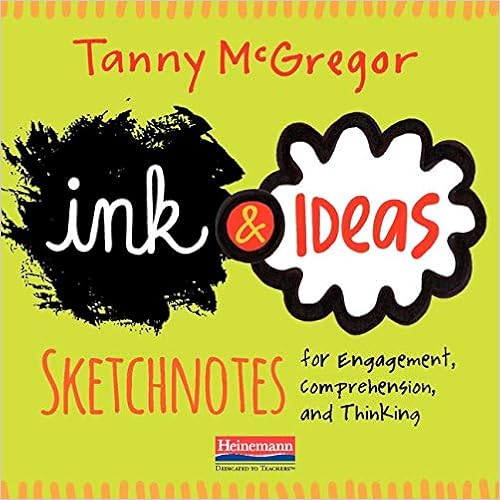
Then I decided to take another step outside my box.  Sketchnoting.  There are a couple students that could really benefit from this as a way to support comprehension while reading fiction and nonfiction books.  I am no expert on this matter because my brain is still learning how to take notes this way.  But, through Tanny McGregor, I was able to get us started.  Her new book just came out and I am excited to dig in and help these students dig deeper into the books that they read.


Once I feel a bit more confident in my sketchnoting, I will post some tips for your readers.  If you have used anything like this with your readers, please share any tips you may have!


Responsive Literacy: A Comprehensive Framework Part 1

Jul 9, 2018

 This summer Maria and I were offered the opportunity to read Responsive Literacy: A Comprehensive Framework edited by Patricia L. Scharer.  The book is written by professionals that work within the Literacy Collaborative at The Ohio State University.  A few years back, I attended a training in this framework.  It is built around strong literacy practices and this book digs deep into that instruction.  While reading, I was reminded of the learnings that I took away from the training but also literacy practices that I could improve upon this upcoming year.

A look at a professional text to support the teaching of all things ELA.

 Let Them Talk...

a look at the importance of oral language in readingChapter 1 starts this book off strong because it is all about Oral Language!  Yes!!  This has been a HUGE game changer for us over the past several years.  We have included more and more intentional oral language into our literacy instruction. Because, as the author reinforces, although students come to school with language experience, they are rapidly continuing to develop this skill.  And so, we need to be intentional about the opportunities we provide during interactive read aloud, shared reading, guided reading, writer's workshop, and word study.  Gay Su Pinnell offers a buffet of ideas for each of these.  This chapter reminded me that children need to be given time to interact.  They need to talk.  We need to listen.


Literacy is Emotional

students must have the will to learn to have the skillAfter some great descriptions on a literacy framework, Carol A. Lyons takes a deeper look at the role emotion plays on memory and comprehension.  She explains that there is an inseparable connection between emotion and cognition.  This is important to note because we are supporting the learning of little humans.  And humans are emotional!  One thing that I found fascinating is that memories are stronger when emotions are connected to them.  What does this mean for our literacy instruction?  What emotions are we bringing out in our students?  And what emotions are they connecting to their learning of language, writing, and reading skills?
Wendy Sheets continues this discussion by examining how we foster literate identities.  The actions we take within our classroom tells stories to our students.  One point that she is makes during this chapter is that students are not a reading level. What stories and emotions are we bringing to the table when we limit them to a book level?   I don't believe positive ones (but that could be another post).  Wendy says, "The literate identities that our students take on affect their progress over time."

Get Organized

The second section of this book dives into how to organize for independent readers.  Our ultimate goal as teachers, right!  We work so hard to help students to think, read, and write independently.  I love the way that it is broken down into sections about independent work, the second grade transition, and independent readers in grades 2-6 because we know that reading and writing look different throughout our lower grade levels.  One part that I really loved discussed how to make independent work more powerful.  As the year went on, I know that it could be easy for me to get into an independent work slump.  The authors suggest analyzing the following when organizing work that challenges each student:
  • create just right challenges
  • provide authentic problem solving activities
  • provide open activities for choice and inquiry
My brain immediately clung to the word "inquiry."  Fostering curiosity and the wonderment of children is something I do not believe I am tapping into enough.  It is definitely  a goal for this upcoming year.

Let's Read

Section three dissects all things reading!  Interactive read alouds, shared reading, guided reading, fluency, comp, and the use of data are all explored in great detail.  Whether a new teacher, an experienced teacher, or a teacher looking for a refresher...this book hits it all.
Over the years I have found that there are certain ways that I do things.  But when reading and growing throughout the summer, I am reminded that I am not stuck to these routines.  Lisa Pinkerton reminded me, in this section, that interactive read alouds do  not need a lengthy introduction.  It can even be as quick as, "I found a new book for you this weekend!  I am so excited to share it with you!" Yes!  What a great reminder.
But Mary D Fried goes on to examine how we are scaffolding the introductions of guided reading books.  When I first looked at this chapter, I was ready to skip it because this is what I do all...day...long.  But then I saw this:
traditional framework to introducing a book
Uh.Oh.  I may have some new things to learn!  The chapter really looks carefully at the differences between an emergent, early, and transitional reader.  The introduction is not going to be a "one size fits all" because these readers need different scaffolds based on where they are in their learning.  As facilitators of this learning we have to be very deliberate in the teaching decisions that we make.  The author does provide a guide for scaffolding a book introduction for emergent, early, and transitional readers.

Another point that I really took to heart was concerning data and the analysis of a reading record.  Since we began using LLI (Leveled Literacy Instruction) two years ago, my reading record analysis has been much stronger.  But Sherry Kinzel shared a chart that really opened my eyes to how I could strengthen what I am learning about the reader.  The chart is separated into three columns:
  • reading behaviors the reader uses successfully
  • reading behaviors the read can "almost do" or can use with support
  • reading behaviors the readers shows no evidence of using
This is just a different way for me to note what the student is doing and I think it would really help me to better plan for future instruction.

Check back as Maria dives deeper into sections about writing, language and a learning community!  Plus...we have some books to giveaway!


Note Taking Reflections

Nov 28, 2017

It is almost December!  How does the year fly by so quickly?  Today I found myself in a mess of papers.  It was all for good reason.  Or at least I hope so.

My OCD comes out in many ways...reflections is one of those ways.  I am probably too hard on myself in many cases, but this has also led to a lot of personal growth. 

Today was no exception.  Last year I wrote a post about my need for better note taking with my LLI prompting.  It looked something like this...
I still love the concept behind this because I was trying to look for overall patterns that would guide my instruction.  And it has.  But what I am missing is the big picture.  How are my students reading when compared to the literacy continuum?  Are they exhibiting the reading behaviors that are appropriate for them and how can I push them to grow?

So this led to a mess: the emptying of my binder, new dividers, more labels, and a continuum checklist.

 I believe this will help me as I continue to intervene with my young readers.  But if I had not reflected on how my note taking process was going, I would have continued on the path I was on.  And it was not a bad path.  But I am hoping for a more effective and responsive system.

This is what teaching is all about.  Learning right along side our little learners.

Em

Working on Positive Actions

Oct 15, 2017

We all like to hear positive things.  And children are no different.

After reading and having discussions about working towards a more trauma-sensitive classroom, I continued to think about what I can do in my small groups to highlight the positive actions that occur.


After a running record, I have always talked to my students about what they are doing really well and what they can work on.  Always emphasizing that they are not alone and I tell them what I am going to do to help them with that skill.

But I wanted to do a bit more.

I am still having this conversation with them.  But I am also writing down one positive thing they are doing in a card to their families.  I write it quickly as I am taking notes on their reading. The note may say..."Ruby was looking at beginning sounds when reading today!" So this is not taking a lot of time.  But my students are really excited to have a little note to take home!


We use LLI as an intervention in our school.  Every other day, students write about the text during our small group lesson.  It is so easy to point out everything they are doing incorrectly when writing.  But, of course, this would be so deflating and pointless.  So this year I started pointing out some of their positive actions with little stickers in their books.


It is really simple.  And probably a bit silly.  But I want them to feel good about what they ARE doing so that hopefully they will keep paying attention to those details.

I also want to share something I observed in Maria's room.


These are golden frames that hang on one of her bulletin boards.  She hangs up work and writes down what the student did well.  I love how specific it is and it models the behavior for other students.  It is a simple, quick, and easy way to point out the positive for a student.

I completely recognize that none of these ideas are ground breaking.  But I know I needed a little push to add more of these actions into my daily routine.

Now I just need to just keep it up!

Em

Guided Reading Supports and Supplements

Mar 28, 2017

This year we made a lot of changes to our RtI process.  I shared many of them at the beginning of this school year.  And watching how they all played out has been amazing.  But that needs a whole other post.  Today, I want to focus on just one of those changes: LLI or Leveled Literacy Intervention by Fountas and Pinnell.

This has been an absolute game changer at my school, when it comes to intervening with students that are reading below grade level.  First of all, we call it "book club" in my building.  So, of course, every single student wants to be in LLI! We have been able to service many kids with the intervention this year and when a student "graduates" out, they are so sad!  Some of them have even decided to start their own book clubs at lunch.  This is a sign of a good program, to me.
Second, the power of having only three students in a reading group...wow!! I am able to evaluate, analyze, prompt, and teach much more effectively. 
And third, the books.  My students love LOVE the books from LLI.  There are characters that they literally cheer for when I pull out the book for the day.

But, like anything in education, one size will never (and should never) fit all.  I have some students that continue to struggle with knowing their letters and sounds; therefore, I have to infuse more instruction on letters/sounds into my daily lesson routine with them. And my analysis/reflection of my own teaching needed to be strengthened.

Here are some free resources to help you supplement letter/sound knowledge and guided reading notes.

(Note: this can be the case in any guided reading group, not just LLI, and that is why I titled this post "guided reading supports.")

Letter/Sound Correspondence
 
After introducing each letter over a period of time with multi-sensory techniques, my students just needed some repetitive practice that I could complete quickly each day.  Once we complete this quick review, we utilize the letter/sound knowledge through reading and writing everyday.


This format is something that I found on a blog years and years ago.  I have no idea from which blog though.  If you know who this came from, I would love for you to share that information!!  The format has worked well for me but I needed it to fit my LLI needs. So I changed the images to match my needs.  Here's how I use it...The students must touch the images and letters as we chorally recite the page together.  This works on one to one correspondence, directionality, and (not to mention) that they need to look at the letters in order to remember them.  For the letter b, this is what we would chorally say together, " bear, bear, /b/, /b/, b."  The last b is highlighted because we say the letter name instead of sound.

What I have found, is that the students utilize this chart information when I ask them to look for words with a certain beginning sound, when we are writing, and when they are trying to sound out a word.  Their letter/sound knowledge has also increased since I began using it each day.

 Reading Analysis/Notes

 It took me a few years (yes, I am sorry to admit it) to feel like I had running records under control in my guided reading groups.  Fitting everything in has always been a tricky thing.  LLI has the reading records embedded into your instructional time.  Whether it is an LLI group or my regular guided reading groups, I love listening to them one on one and learning what they can do independently and what they need to work on.  

LLI has three categories for a teacher's response when listening to a student read or write: teach, prompt, and reinforce.  "Teach" means that I am having to teach or reteach a skill to a student.  For example, they have not learned a particular vowel team; therefore, I am explaining and teaching that new vowel team to them so that they can decode the word that they are stuck on.  "Prompt" means that I am prompting a student to use a strategy that has been previously taught but that the student is not doing independently, yet.  "Reinforce" means I am providing positive feedback to a student that used a strategy correctly.

This is not necessarily new knowledge.  I think as teachers we just do those three things: teach, prompt, and reinforce.  But what I realized as the year has progressed is that I am not looking for patterns in my teaching and prompting of individual students.   If I wrote down my prompts, would I find patterns?  For example, am I prompting the same student over and over again for VCE words?  Do I actually need to be reteaching this skill, instead of prompting for it?

So I decided to write these things down to look for patterns.  As students are reading independently from their LLI book, I am quickly using code to write down what I teach, prompt, or reinforce.  Then I can use the information to look for patterns over a weeks time and guide my instruction for the following week or lesson.


The prompting guide from Fountas and Pinnell breaks the prompts into groups.  I used these groups to create my codes (which are at the bottom of the sheet).  The codes help me to take notes quickly.  Here is an example of a student.  I typed the notes in red for easier reading.


 When analyzing these notes, I can see that I need to continue to work with this student on vowel sounds.  He continues to struggles with this visual information when solving unknown words in his reading and writing.

When it comes to LLI and my guided reading groups, I always have room to grow.  These are two ways that I have supplemented my instruction but I will be continuing my quest for more ways to strengthen what I do.  If you would like to try these out, just click on the images below to grab them.


https://drive.google.com/file/d/0B3eyEJCd5J5kSDEyeDRDa0I0Y1U/view?usp=sharinghttps://drive.google.com/file/d/0B3eyEJCd5J5kYmR3MnVBbDdBakU/view?usp=sharing

 Thanks!
Em

Reading Strategy: Does It Match?

Oct 1, 2016

Over the summer I read Reading Wellness:

https://www.amazon.com/Reading-Wellness-Lessons-Independence-Proficiency/dp/1625310153

Each chapter focused on one skill that would promote independence in your readers.  I loved the layout of this book because it got right down to the lesson(s) to use in order to make this happen in your classroom.  My sister and I wrote about a lesson called "Does it match?" over at the Adventures in Literacy Land.  This chapter focused on alignment when reading.  I loved the lesson when I read about it in July, but then actually DOING it....WOW!  It turned out better than I had anticipated.

The authors, Burkins and Yaris, explain that alignment must occur for readers through print and meaning.  Both must be attended to and in alignment.  The authors explain that print and meaning are comparable to a puzzle: the pieces versus the puzzle.  Which one is more important?  Both.  They are essential and important to the activity of putting a puzzle together.

Burkins and Yaris go on to say that by offering explicit strategies such as "get your mouth ready" or "look for a small word inside the big word," we are not allowing students to be decision makers or problem solvers.  They state that we are "...telling them how to solve a problem rather than supporting them in solving the problem themselves." (p71)

These statement really struck me and stuck with me as my teammate, Karen, and I prepared for our school year.  We have always taught with reading strategies like the ones described by the authors.  How do we help our new, young readers to "make it match?"

So we devised a plan...

In previous posts, I have explained that Karen and I team teach our reading strategies by modeling the strategy, asking the students to name what we do, and then asking them to illustrate it with us.  This has proven to work well for us because they are ready to practice and use those strategies during guided reading once our lessons are complete.  We wanted to do the same this year but with one little (GAME CHANGING) addition.

 We started our lesson by asking our students what body parts they use when reading.  They came up with: *eyes (to look at words and pictures)
*mouth (to say the words)
*brain (to think about the story)....we may have helped with this one.

As they came up with these body parts, I drew them on this blank puzzle.  Then I connected them with a triangle and wrote the words "Does it match?"  We explained that good readers use all three of these body parts when they read.  Then we told them that they will get stuck on words and will need to use strategies to help them solve the word but that they are always thinking "Does it match? Is what I see, what I'm saying, and what I'm thinking about the story all match?"


Once we had laid this foundation, Karen and I continued with our lessons on individual strategies.  But this year we wrote each one on a puzzle piece.  We kept reinforcing that our brain, eyes, and mouth must match in order for the story to make sense.  My goal is to use this phrase, "Does it match?" when a student needs to be prompted to solve a word while reading. 

A side note...another discovery that we made was that we also needed to start using this question during writing instruction.  Students need to make sure what they saying (or writing), what they draw (or see), and what they are thinking (about the story) all match in order for their writing to make sense.  Connection made!! Yay!!!

I can't wait to see how this change in language changes our readers!
Em

Reading Rituals

Jul 29, 2016

It is rounding the corner to the end of July.  How did that happen?

My goal this summer was one word: Inspiration.  I wanted to be inspired by the PD that I took, the books that I read, and the things that I did.  In turn, I was not online as much, blogged even less, and created nothing.  But life ebbs and flows.  And so it is okay.

Last night I met with my teammate and we discussed some of the learning that came out of my different PD events this summer.  Looking at it collectively and being reflected.  Inspiration occurred.  And most of it can fall into one category: Reading Rituals.


I went to a session this summer at Nerd Camp titled "Motivating Readers without Incentives" by two ladies from Teacher2TeacherHelp.com.  The book that started reading rituals for them was "Reconsidering Read Aloud" by Mary Lee Hahn.  The presenters explained that rituals bring people together and connect people to a larger community.  Reading rituals.

So by looking back at my notes I came up with a list of reading rituals that I would like to try to incorporate this year into my school/guided reading groups.  You may do many of these or this list may help you to rethink something you are currently doing.  Some of the ideas I have gone back and pinned.

1. Books We've Read Display

My teammate and I will do this with her whole group books.  But I also want to have a running record of our guided reading books.  Because as first graders they really need to see the massive amount of books they really are reading each and every week!  Here are some pins that I found for these ideas (you can click on them for further details from that author):


https://www.pinterest.com/pin/AYPu1ZAWZXl9Ueddy_ekRxllFl2E7pmkdyVUAc24nex9HxSUcJPk_Ao/https://www.pinterest.com/pin/227291112423299692/


2. Staff and student book selfies.  I want the students to see that I am always reading too!  And I want them to have their pictures taken with their favorites.  There are so many ways to do this and I foresee myself putting up a plate stand in my guided reading area with my "current read."  Here are few pins:


https://www.pinterest.com/pin/227291112423354618/https://www.pinterest.com/pin/227291112423354614/

 3. One goal this year is to make their thinking about books more visible.  During guided reading, I want to have an "exploratory notebook" for me to write down any thinking, wondering, or questions that they have about the book we are currently reading. (Betsy Hubbard has many posts about this concept!)  As first graders, I want to honor their thinking and know that it is important.  Another thought is to have a "glitter board" or frame where we write down favorite quotes from a book we are currently reading.  Here are a few pins that can lead you to more information:

https://www.pinterest.com/pin/126593439504806293/https://www.pinterest.com/pin/227291112423354586/

 4. Book Talks.  At the Scholastic Summit, I learned so much about the power of book talks.  I would like to integrate this into an announcement with books from our Readbox.  My hope is that after much modeling, some students may be interested in doing the book talks for me!  Scholastic has some resources on Book Talks and I think I need to watch many YouTube videos to help me out.

5. I love this one: end of the year book signing.  The class picks their favorite book from the year and they all sign their names to the inside cover.  It is a way for you to remember their favorite book and future students!

A few other things that I would like to do is add some student published books into my guided reading lessons somehow and also into the Readbox.  I want to encourage students to look at all parts and angles of a book (spine, cover pages, smell, etc), and Skype.  My students need to meet more authors!


What are some of your reading rituals that you think would benefit my students.  I think all these small rituals are going to add up to something HUGE!!


**All of the pins in this post do link to the original owner.  Please click to learn more about each one of them.

Teaching with Purpose

Apr 17, 2016


This is one of my favorite and least favorite times of year.  Let's start with least favorite reasons (just to get it over with)...
* Testing
* Testing
* Testing
Because of my position, I am pulled for the next three weeks to do state testing and benchmark testing.  This means no interventions, guided reading groups, guided math groups, or writing conferences.  It also means sadness for me.  It makes me feel like my year is over even though it is not.

That leads me to my favorite reasons (there is always a silver lining):
* Thinking ahead to next year
* Preparing for next year
* Getting excited about changes
* Organization
* Planning

I have a lot of things "cooking" at the end of this particular year.  My Title I teammate, Sarah, and I are trying to make the most of our minutes away from testing by rethinking our Readbox, Game Nights for next year, hallway decor, RtI process, and providing more purpose (my topic for today!)

Tammy from Forever In First has been sharing the wisdom of Regie Routman for years now, but I just recently listened.  I picked up two of her books...finally...and started with Teaching Essentials.  I have not quite finished the book, yet but there is so much that has already been tagged to be remembered and implemented.  This paragraph stuck with me:
...we must always question why we're doing what we're doing and why these students need to know what we're teaching.  We need to ask ourselves continually, So what?  What difference will it make?  Teaching something with more intention or finding out what students are really interested in is hard.  It takes thought, effort, extra hours, but in the long run we save time, because our students are engaged and want to learn. (p. 62)
Honestly, I read this paragraph and thought to myself, Yes, I do this.  I always set the purpose for our lessons.  But over the course of the next few weeks, Regie's words continued to come back. Forcing me to rethink what I was currently doing.  What I realized is that I do always set the purpose but I could do more.

And here's how...

In guided reading, we read a lot of leveled readers.  We do this to grow as readers, to enjoy reading books that are not too hard, and for me to work with students on their strengths.  But...I want to have better purpose when choosing the books.  When we read a book about Baby Bear, Father Bear, and Mother Bear, we are going to read because we have fallen in love with these characters.  When we read a nonfiction text, it will be because someone in our current reading group is interested in that topic and we will look to them to be our "expert."  And when we read a how-to, we are going to test it out.


Along with this idea, one goal I have for next year is to include more oral language activities.  This includes wordless books and asking students to orally tell the stories.  I want students to understand the purpose of their oral stories is for others to enjoy and learn from, while also improving their skill as a storyteller.  In the "Readbox," I plan to have some of these stories available (with a tape deck and headphones) for checkout.  Other families will be able to enjoy the story telling skills of our first graders.

For writer's workshop, I want the students to understand the importance and purpose that their writing plays in the lives in others!  To support this idea, I want to include writing pieces into our "Readbox" to be checked out at dismissal.  I want to use some pieces during guided reading lessons.  My hope is that these small changes, will have a lasting impact on the purpose that their writing serves for themselves and others.

In math, Jess and I work to set the purpose of each skill taught with a real world lesson.  For example, when we started our place value unit, we put out lots of Smarties.  After some good brainstorming, the students decided groups of ten would be the best way to count all the Smarties.  So this is what we did.  We made the Smarties into groups of tens and ones.  Not only did it help us to set a purpose to place value, but the students actually helped us to make the manipulatives that we would then use throughout the lessons.


I do realize that I will never reach a point when my teaching is the best that it can be.  There is always room for me to grow and improve.  So I will keep reading, learning and growing from my students, experts like Regie, from my fellow bloggers, and all the teachers that I share a space with daily.


Chair Pocket Alternative

Jan 29, 2016


Organization.  I love it.  Organizing, reorganizing, then organizing again.  My teaching location has changed many times in my career; therefore, I have had lots of practice.  And I am not complaining.  Each year it gives me a chance to rethink what I keep, what I pitch, and how I make it all fit.

One important piece to my guided reading and guided math groups are chair pockets.  This is where we house our book baggies (filled with leveled readers for each kid) and our math journals that are used during guided math.

Just to clarify...Our school is departmentalized.  So these groups do occur in two different classrooms.

The chair pockets have been so helpful.  But I have found that over time, the kids are left with very little room to actually sit on the chair.  The book baggies and notebooks end up taking up so much room!  And I cannot flip the pockets around because all the items and baggies end up on the floor.


It is not the fault of the chair pockets but the fault of all our great learning (and probably the teacher that allows the books to stay in the baggies for a good many weeks).

Then I came across some baskets at IKEA and I just couldn't NOT try them out!


We used zip ties to hold the baskets onto the back of chairs.  Honestly, I was not sure how it was going to work out.  Would they be too heavy and make the chair fall all the time?  Would they be too bulky and in the way?  Would they drag the ground?

Nope.

Actually, I have really liked them.  The bags fit in them so nicely.  No more bulky pockets that leave little room for the kids to actually sit.  The notebooks also fit really well and are out of the way when they are not needed.

Yep.  I think I like this alternative.  The chair pockets will still have a place in our classroom, just not in my guided reading or guided math groups.  And for now...I am loving this organization.

How Do You Teach Fluency?

Apr 3, 2015


Fluency instruction.  I have to admit there are some things that I am doing well in this category and some areas that I need to strengthen and grow.  Fluency is in the forefront of my mind today because we just had our end-of-the-year Aimsweb assessments.  Yes, these should not be given until May.  But we are evaluated on the growth that our students make; therefore, the tests are given in March.  Looking at the results gives me the motivation to reflect back and think ahead.

I feel like I do a good job of introducing fluency and what it is.

http://curiousfirsties.blogspot.com/2014/01/a-fluent-wednesday-wow.html

Through movement, we model what fluency sounds like.  Students squeeze together and stand far apart to visually show what different readers may sound like.  Then swoops are introduced with a ribbon.  Anchor charts are created together to help us gather our thoughts about skateboard versus robot readers.  You can read more about this procedure by clicking HERE.

http://curiousfirsties.blogspot.com/2014/02/repeated-readings-with-poetry.html

There is modeling... repeated modeling. Choral, echo, and independent reading are all incorporated into my guided reading lessons and Karen's whole group lessons.  Poetry, nursery rhymes, and songs are all part of our daily routine.


I try to make sure I am using high interest, colorful books from our leveled book room. Students complete interest surveys at the beginning of the year and I observe carefully throughout the year to the books that they respond best to.

http://dailylearningtothecore.blogspot.com/2014/10/guided-reading-makes-me-happy-freebie.html

Recently, I found these F&P leveled passages by Learning to the Core.  After using them for a few weeks, I really love them.  I use them in my reading group as a quick choral read and a quick independent read.  I know the exact level of the texts, the graphics are appealing, and the stories themselves are engaging.  They have been very helpful to me and I will be using them right away next year.

 But...

Fluency is one of those things that you can only attain by reading.  You can introduce it, model it, practice it, encourage it.  But, in the end, they just need to READ.  The following excerpts are from Richard Allington (click on the links to read the whole articles).  He is right, completely right.

Self-selected reading activity seems to be about twice as powerful at generating reading development as teacher-selected reading (Guthrie & Humenick, 2004; Lindsay, 2010).
Struggling readers need precisely what good readers receive—lots of high-success reading experiences (Allington, 2009). These experiences provide evidence of the self-teaching hypothesis (Share & Stanovich, 1995), which proposes that children develop a variety of reading skills—such as phonemic segmentation, decoding, and vocabulary building—when they engage in high-success reading.
-Educational Leadership (ASCD) March, 2011

In typical classrooms, it is not unusual to find that kids read and write for as little as ten percent of the day (30 minutes of reading and writing activity in a 300 minute, or five hour, school day).
-Reading Rocks, originally found in Phi Delta Kappan, 2002
So looking ahead...
*I would like to do more high-success reading (Allington says this is reading with 98% accuracy) with lower leveled guided reading books and the engaging passages I shared above.
*I would like to ensure that I optimize the amount of time students are reading in my guided reading groups.
*I would like to look into using some reader's theater stories.  A Teeny, Tiny Teacher has some partner passages that I have heard are really good and already highlighted (thank you!).  I also received a Robert Munsch book of plays that could be helpful.
*I would like my students to just read, read, read, read, read....so I will keep thinking creatively to make this happen as much as I can when they are with me and hope that I can make it happen in their homes too.

How do you teach fluency in your classroom?